
Philosophy & Practice
Meditations
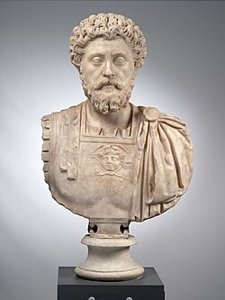
Marcus Aurelius
About the book
Marcus Aurelius wrote these reflections for himself rather than as a polished public treatise. Their recurring concerns—judgment, mortality, responsibility, and conduct toward others—show Stoic philosophy being used as a daily discipline.
The distinction between what we control and what we encounter is especially useful when read alongside the emperor’s obligations. Stoicism here need not mean indifference: the notes repeatedly return to acting fairly within a shared human world.
Selected passages
Book IV · The Present
“Do not act as if thou were going to live ten thousand years.”
Marcus Aurelius
Book IV, section 17 excerpt reproduced on Amazon ↗The reminder in Book IV turns mortality into a reason to act well now. It is not a call to panic or productivity at any cost: the surrounding concern is character, duty, and how to live with other people.
Book X · Conduct
“Waste no more time arguing what a good man should be. Be one.”
Marcus Aurelius
Meditations excerpt; translation and section identified at The Stoic Reference · X.16, Gregory Hays ↗The emphasis is on acting with integrity rather than endlessly defining it. This is a reminder directed at the writer himself.
Book IV · Judgment
“Take away thy opinion, and then there is taken away the complaint”
Marcus Aurelius
Meditations excerpt; translation and section identified at The Stoic Reference · IV.7, George Long ↗This fragment concerns the role of interpretation in distress. It should not be used to deny real injury or excuse someone else’s wrongdoing.
Book VI · Power
“Take care not to be Caesarified, or dyed with purple”
Marcus Aurelius
Meditations excerpt; translation and section identified at The Stoic Reference · VI.30, George Long ↗The emperor warns himself not to let status distort character. Power makes this self-scrutiny more necessary, not less.
Book VII · Other People
“It is a man's special privilege to love even those who wrong him.”
Marcus Aurelius
Meditations excerpt; translation and section identified at The Stoic Reference · VII.22, Maxwell Staniforth ↗Compassion and fairness need not erase accountability. The passage asks how to retain a humane disposition in conflict.
Cover: Umanoide / Unsplash · Thematic photograph, not a book cover.
Author portrait: Didier Descouens / CC BY-SA 4.0; sculptural portrait