
Fiction & Literature
The Little Prince
Antoine de Saint-Exupéry
About the book
A stranded aviator encounters a young traveler from another planet. Through a rose, a fox, and a succession of unusual adults, Antoine de Saint-Exupéry’s novella explores affection, responsibility, loneliness, and the limits of measuring everything.
The story can be read as a children’s tale or as a quiet critique of adult priorities. Its simplicity leaves room for questions about how attention changes a relationship and why something apparently ordinary can become irreplaceable.
Selected passages
Chapter XXI · The Fox
“It is the time you have wasted for your rose that makes your rose so important.”
Antoine de Saint-Exupéry
Chapter XXI excerpt reproduced on Amazon; wording varies by translation ↗The fox connects significance to attention and care. A rose becomes irreplaceable through a relationship, not through scarcity or an objective ranking of roses.
Chapter XXVI · The Stars
“You -- you alone will have the stars as no one else has them”
Antoine de Saint-Exupéry
Chapter XXVI excerpt quoted in an Amazon reader review ↗The farewell makes the same sky personal: memory changes how the aviator sees it. The stars become a way of carrying a relationship beyond physical presence.
Chapter XXI · Seeing
“It is only with the heart that one can see rightly.”
Antoine de Saint-Exupéry
Chapter XXI; Amazon description, translation-dependent wording ↗The fox’s advice contrasts attention and attachment with a purely external measure of importance.
Chapter XXI · The Essential
“What is essential is invisible to the eye.”
Antoine de Saint-Exupéry
Chapter XXI; Amazon description, translation-dependent wording ↗This line continues the fox’s secret. What matters in a relationship cannot always be seen or counted.
Chapter XXI · Responsibility
“You become responsible, forever, for what you have tamed.”
Antoine de Saint-Exupéry
Chapter XXI; Amazon book description ↗The fox gives closeness an ethical dimension: connection entails care rather than ownership.
Cover: Jean Carlo Emer / Unsplash · Thematic photograph, not a book cover.
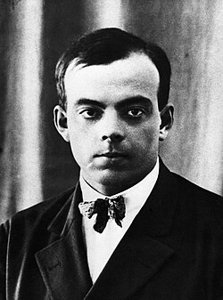
Author portrait: Wikimedia Commons; see source for photographer and reuse terms