
Business & Innovation
Zero to One
Peter Thiel
About the book
Peter Thiel’s book, written with Blake Masters, distinguishes creating something genuinely new from extending an existing idea. It frames entrepreneurship through questions about differentiation, competition, and the assumptions a business makes about the future.
The useful tension is between a compelling vision and evidence that the vision can work. Its arguments are a starting point for examining a venture, not a guarantee that market power or a contrarian idea will produce a responsible, durable company.
Selected passages
Building the Future
“You are not a lottery ticket”
Peter Thiel
Book excerpt quoted in an Amazon reader review; written with Blake Masters ↗Thiel challenges a purely accidental account of achievement. The practical question is what a founder can deliberately build, test, and distinguish from an existing business—not whether uncertainty can be wished away.
A Singular Moment
“Every moment in business happens only once.”
Peter Thiel
Preface; Amazon reading sample ↗Copying a past success cannot reproduce the circumstances that made it possible. The opening asks founders to look for a genuinely new contribution.
Copying & Creating
“If you are copying these guys, you aren’t learning from them.”
Peter Thiel
Preface; Amazon reading sample ↗The distinction is between repeating a visible result and understanding the first-principles reasoning behind it.
Untried Paths
“the best paths are new and untried.”
Peter Thiel
Short preface excerpt; Amazon reading sample ↗An original path is not automatically a good one. It needs evidence, a useful product, and a reason people will choose it.
No Formula for Success
“this book offers no formula for success.”
Peter Thiel
Short preface excerpt; Amazon reading sample ↗Thiel explicitly limits the promise of the book. Patterns can provoke useful questions without becoming a recipe that guarantees outcomes.
Cover: Marc Kleen / Unsplash · Thematic photograph, not a book cover.
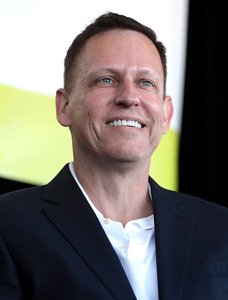
Author portrait: Gage Skidmore / CC BY-SA 3.0